

Inside Rick Pollack’s nearly 45 years shaping AHA
Outgoing CEO details the levers and crisis decisions that helped sustain the association and grow assets.
- June 14, 2026 |
-
 James Cullum
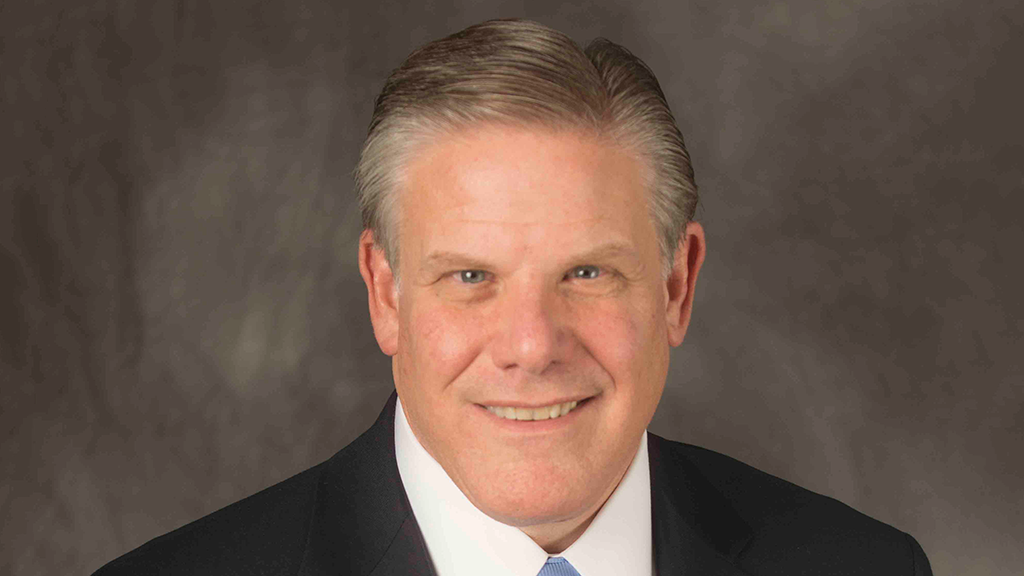
Rick Pollack has spent more than half his life — more than four decades — as an executive for the American Hospital Association (AHA). Under his leadership, AHA’s revenues have grown, even as operating expenses climbed and the hospital industry weathered COVID and the Trump administration’s sweeping Medicaid changes.
Pollack is now planning to retire at the end of this year.
“I’ve been working for over 50 years and never had more than two weeks off,” Pollack told CEO Update. “There may be opportunities to contribute in other ways, but I feel like I’ve pretty much run the race.”
There’s a national search for Pollack’s successor, and Pollack says they’ll need strong leadership qualities to drive the organization forward. With the Trump administration’s aggressive stance toward Medicaid and the Affordable Care Act, the new chief likely won’t have to look far for challenges.
“I can only imagine that the (next CEO) will be focused on the mission and vision that we have as an organization, that they are solution-oriented, will continue to work toward building coalitions, and will be focused on how hospitals need to innovate to continue to serve their communities in the future.”
A statement from the association praised Pollack for focusing “extensively on what matters most to AHA members.” This focus helped ensure the long-term sustainability of AHA through growing its investment portfolio and diversifying revenue streams, including non-dues revenue.
“AHA’s net assets under Rick’s leadership grew by 57% through 2024. In addition, AHA’s non-dues revenue grew by 26% and total revenue grew by 15%,” AHA said.
First generation
A native of Brooklyn, New York, both sides of Pollack's family emigrated from Russia in the 1920s to escape religious persecution. He’s also the first member of his family to attend college and graduated from the State University of New York at Cortland with a bachelor’s degree in political science and communications. He later got a master’s in public administration from American University.
In 1980, Pollack got his first healthcare-related job as a legislative representative for the American Nurses Association. He held the job for two years and then joined AHA as an associate director. He would go on to be a vice president for AHA’s Washington office for five years, and then executive vice president for 25 years before being promoted to president and CEO in 2015.
“It’s pretty easy when you’ve had really good bosses that became friends and mentors,” Pollack said. “You have colleagues that you enjoy being around, and have a cause that you believe in. That’s why it’s been that long.”
Seminal moment
Five years after he was promoted to CEO, the healthcare industry was rocked by the COVID-19 pandemic. The public health emergency lasted for three years, forcing hospitals around the globe to completely shift operations.
“The pandemic was a seminal event that demonstrated how hospitals truly are essential to the nation’s critical infrastructure,” Pollack said. “And frankly, it also demonstrated how, in so many communities, the infrastructure for public health doesn’t exist.”
Behind the scenes, those years forced hard choices in how AHA used its growing balance sheet: when to invest in data, lobbying and cybersecurity, and when to sit on reserves so it could respond to the next policy wave.
Levers of influence
For CEOs looking to mirror Pollack’s leadership journey, he credits some of his success to AHA’s “levers of influence.” The key to longevity and growth, he said, lies in how association CEOs use these levers to survive policy shocks and financial stress.
“We built a very sophisticated political and grassroots network in every congressional district, and it’s been very effective over the years,” Pollack said.
“There are a lot of different levers. Data is a lever. Offering ideas in terms of policy suggestions is a lever. Advertising is a lever. Having grassroots advocacy is a lever, and grassroots lobbying for an organization like ours is very significant when you consider that there’s a hospital in virtually every congressional district in the country. Having your physical presence on the Hill is a lever, having events that you put together is a lever, building coalitions is a lever, doing things that represent taking actions on our own to address key problems before there’s a government solution is a lever.”
AHA’s political action committee contributes millions to Democratic and Republican members of Congress. Additionally, one project Pollack is especially proud of is a cybersecurity program developed in collaboration with the FBI and other agencies.
The AHA board of trustees has hired WittKieffer to conduct the search for Pollack’s replacement. The board also voted to give Pollack the title of AHA President and CEO Emeritus after he leaves his post.
Pollack said that his work pales in comparison to what healthcare workers in hospitals contribute.
“What they do is amazing, in terms of taking care of people, whether it’s sick people or keeping people healthy,” he said. “It’s just been an honor and privilege to say I represent them.”