

Passion for hematology is in Marty Liggett’s blood
Former professor has transformed American Society of Hematology into global heavyweight fighting to revive research funding.
- February 17, 2026 |
-
 WILLIAM EHART
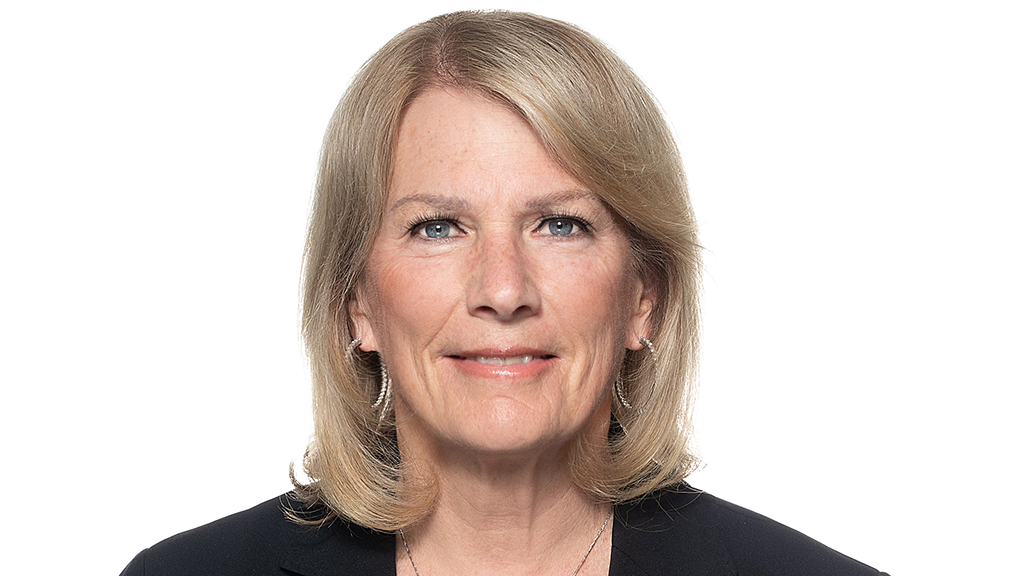
Martha “Marty” Liggett is the only full-time executive director the American Society of Hematology (ASH) has ever had. She became the society’s fourth full-time employee in 1996, at a time when the association was run by an association management company.
Thirty years later, ASH’s budget is more than 20 times larger, the staff has grown to 171, and the association’s influence is felt around the globe. From the marble hallways of the U.S. Capitol to villages in Africa, where ASH members are saving the lives of thousands of babies, the mission of the association and the profession resonate deeply with Liggett; hence her long tenure.
She knows the time will come for her to move on, but for now, there is nothing she’d rather do.
And right now, ASH, along with many other science and medical groups, is embroiled in a battle to undo the Trump administration’s wanton cuts to research funding. For its #Fight4Hematology campaign, the association has reached into its ample reserves to lobby Congress and to support researchers, especially those early in their careers, with bridge grants until the country decides once again to fund efforts to cure disease.
Liggett is the CEO Update and Association TRENDS 2026 Professional Society Executive of the Year.
It’s been quite a journey for the former dental hygienist who became a professor at the Georgetown School of Dentistry (which no longer exists) and was surprised when the American Dental Education Association asked her to become its chief lobbyist.
“They thought I knew something about lobbying,” Liggett quips.
Following is a transcript of our recent interview with Liggett, edited for length and clarity:
CEO Update: How did you come to be the first full-time executive director of the American Society of Hematology?
Marty Liggett: When I joined ASH, it was still managed by association management company Smithbucklin. Michael Payne was the part-time executive director. He made the decision that ASH needed a full-time executive director. I joined in 1996 as the deputy executive director, with the understanding that I’d become executive director in December that year.
CU: How big was the association at the time?
ML: I was the fourth full-time ASH employee. Their budget at that time was $5.5 million, and they had not quite $8 million in reserves, which were the endowments for some of their awards programs.
CU: When did the association become self-managed?
ML: In January of 2000. By 1999 we had grown to 19 full-time ASH staff because we had brought the publication of our journal, Blood, in house, and that required quite a few people coming aboard. At a certain point you get big enough that it’s not a match anymore with an association management company. We actually moved into our own headquarters space in March of 2000.
CU: Was that one of your first big decisions, bringing the journal in house?
ML: Yes, that was the first major decision, which was made even before the decision to leave Smithbucklin. Our volunteer leadership is savvy and did a thorough assessment and decided we would do better financially if we brought the journal in house rather than continuing to use a publisher. About five years ago, we went through the same process and decided to go back to a publisher, Elsevier.
CU: How big is your budget now?
ML: Our annual budget right now is $130 million, and through careful management of our expenses these past 20 years, we have built a significant reserve fund, about $225 million. The growth of reserves has been purposeful, because I knew from the outset that growing reserves allows you to withstand a rainy day. And we’ve had a couple of times where we felt comfortable making decisions because we knew we had those reserves. And then, most recently, we’ve actually dipped into the reserves because it’s been a rainy day.
CU: Many health and science associations are dealing with grant cuts. Did ASH receive federal grants? And what has been the impact on your members?
ML: ASH itself does not receive any federal funding. Our board met in February 2025 because we were very concerned about federal funding that goes to our researchers. We were also very worried about early career scientists, what this would do to their careers. So, our board told us to think of everything we could do to help.
CU: What was your response?
ML: We proposed a multifaceted approach, which the board approved and actually added to. We dipped into reserves to create additional awards for members. We typically provided about $11 million of awards throughout the year to our members. We added $9 million. We built on our bridge grant program. If you narrowly missed getting National Institutes of Health funding, you can apply for a bridge grant from us, and we bridge you so that you’ll have time to reapply and hopefully get the grant from NIH on the next go-round. But we also added money to other early career awards for graduate students and Ph.D’s., and we created a new award for population health research (which focuses on populations with a higher disease burden), because that was pretty much wiped out (by the Trump administration).
CU: Why is ASH so concerned about early career researchers?
ML: Because it’s our future. Think about how much has been invested in somebody who’s gotten all the way to a Ph.D. or all the way to an M.D., who’s gotten through fellowship, who’s done the research training, who’s gotten far enough along that they’ve gotten a grant. And then you shut that all down? Their path was hard before, but now it’s impossible. They may go to the pharmaceutical companies, or they may go into clinical practice, which is nice, but then what happens when funding is restored? When we decide we should be researching these diseases and finding cures as opposed to letting that go to China? When we get there, we won’t have any researchers left to do it.
CU: Did you also increase efforts to lobby the government to restore funding?
ML: We beefed up advocacy and bolstered our communications activities through our #Fight4Hematology campaign. We picked out some states where we thought it was important to have local conversations — maybe where there’s research going on but the members of Congress might not be aware of the importance of research in their own backyard.
CU: The Trump administration also is targeting diversity, equity and inclusion programs. Have you had to make any changes to language or policies?
ML: We went back and looked at all our grant programs, and we revised them to make sure that everyone is eligible to apply. We’ve brought everything in line with the need to ensure that no one is precluded from applying. But applicants can make the case that they are first-generation college students or are committed to populations that are underserved.
CU: With the development of artificial intelligence (AI), many associations like yours are trying to remain trusted custodians of knowledge. How are you going about that?
ML: It’s at the top of the list of things that we’re concerned about right now. We want to make sure that the information associated with our journal and our guidelines and our educational products doesn’t get mixed in with misinformation or bad information or non-peer-reviewed information. We don’t know the best way to do that yet. Are we better off building a fence around our knowledge and then being careful about how we make that available? Or would it be better for us to partner with an entity that’s amassing information if we have confidence that that entity is going to be careful about what information is absorbed into their AI system?
CU: I understand ASH provides financial advice to employees.
ML: We have a commitment to work-life balance and we provide access to a variety of wellness things at the office and at home. We provide access to financial wellness, too. If someone works for ASH for many years, perhaps most of their career, my goal is to help them to be comfortable and in a good financial position. We have these financial counselors (from HUB Retirement and Wealth Management) who talk with our employees about their goals now and their goals in retirement. They look at their portfolios and help them, even if it’s just rebalancing. They do not sell any financial products. They only provide financial counseling so that there’s no conflict of interest. It is not an inexpensive benefit. But boy, is it a relief to the employees to know that they’ve got that resource.
CU: Where do you see yourself in five years?
ML: People ask me that all the time, and I really don’t know. In April, I will have been with ASH for 30 years. The difficulty is, ASH is mission-based. Whether it’s what we’re doing right now, with #Fight4Hematology, or what I see happening in Latin America or Africa. … We have seven countries in sub-Saharan Africa where we’re doing newborn screening for sickle cell disease, and we’ve screened 170,000 babies. About 2,300 of them have been found to have sickle cell disease, and we’re getting them into care. Ninety percent of those children would be dead before age five but for that intervention. I say to myself every day, “What would I rather be doing than this?” But on the other hand, I don’t want to stay too long. So, I have to figure that out.
UP CLOSE WITH MARTY LIGGETT
Father doesn’t always know best: Liggett’s late father, George Liggett, a dentist, wanted her to be a dental hygienist. “I got a scholarship to Columbia University, and my dad said, ‘You better take it, because if you think I’m paying for a master’s degree for a girl, you’re crazy,’” Liggett says. Later in life, he became very supportive of her career.
Island rides: Liggett and her husband, James Bader, have a passion for bicycling with friends on islands like Majorca and Sicily. Next up: Sardinia.
Words of wisdom: “You have to be willing to take chances,” Liggett says. “If you’re scared, it’s time to leave. If you can’t think of new, bold ideas, and be willing to tackle them even if they might fail, it’s time to leave.”