

Finding common ground has been key to Burke’s success
With 13 years leading one association and nearly 13 leading another in a different industry, Kevin Burke ascribes longevity to listening.
- February 17, 2026 |
-
 WILLIAM EHART
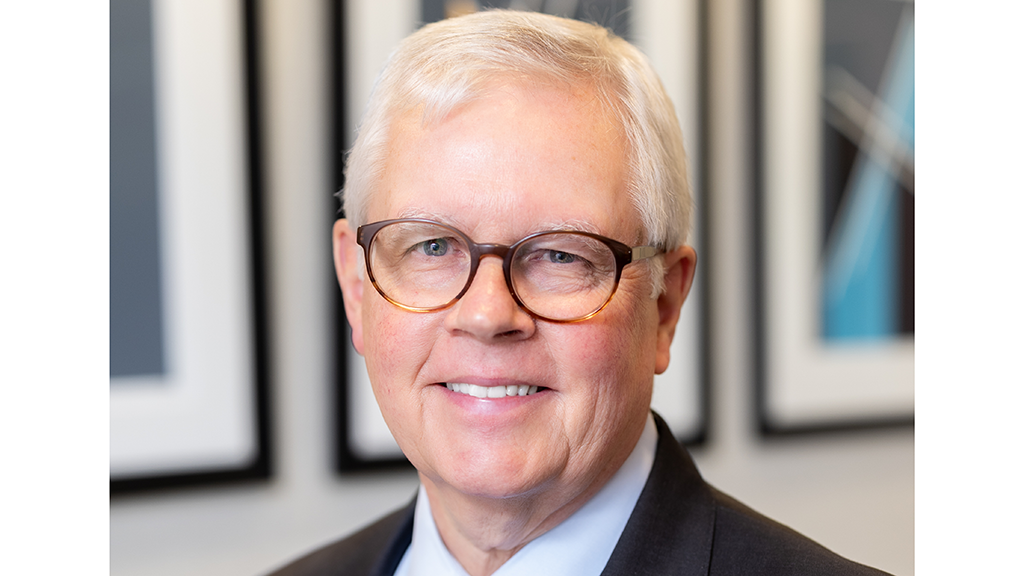
Whether representing apparel and footwear companies or airports, Kevin Burke is grounded in forging consensus.
As CEO of Airports Council International- North America (ACI-NA) for nearly 13 years, Burke mended relations with another key group in the sector, increased the group’s clout in Washington, and helped land $40 billion in federal aid for U.S. airports during the pandemic. (The association also lobbies the Canadian government on behalf of Canadian airport members.)
Before that, Burke led the American Apparel and Footwear Association for 13 years, representing an industry with much more competition among members, which helped him hone his diplomatic skills.
A lover of politics and history, he has specialized in government relations throughout his association career, representing diverse industries from bakers to broadcasters. But as CEO, he lets his government relations staff run with the ball unless his direct involvement is required.
“I use the old adage from (the late former U.S. Chamber of Commerce CEO) Tom Donohue: ‘Hire the best people you can find — people smarter than you — and let them do their jobs,’” Burke told CEO Update. “I have built a great staff. I purposely try to stay away from their day-to-day work because they know what they’re doing.”
In recognition of his accomplishments, Burke is the CEO Update and Association TRENDS 2026 Trade Association Executive of the Year.
Following are excerpts from our recent interview with Burke, edited for length and clarity:
CEO Update: How has Airports Council International-North America changed in your tenure?
Kevin Burke: When I started, we had a lot of work to do. I noticed right away we were not a forward-thinking trade association. We were talking a lot about the present and the past, but not about our future. I said, “We have to start looking forward. Where are we going to be in three years? Where are we going to be in five years? How do we structure our agenda and build the staff to be able to accomplish the goals that our board wants us to achieve?”
We’ve gone from present thinking to both present and future thinking. Any good trade association executive has to keep their eye on the ball and make certain that they’re anticipating the next steps. It’s got to be, “OK, we accomplished this — what’s next?”
CU: Did you build up the staff to accomplish your goals?
KB: Staff is bigger by about 10 people; we now have a staff of 41, with teams in both Washington and Ottawa. We have a president of the Canadian Airports Council who reports directly to me. Her job is to represent us in Ottawa so we don’t have to register as foreign agents. We have an entire team that goes before the Canadian Parliament and represents our interests before Transport Canada.
CU: President Donald Trump made offensive comments about Canada early in his second administration. Did that complicate your life at all?
KB: Not really. The Canadians don’t blame any of that on us; we have a very strong relationship with all our Canadian airports. Their challenge has been the reduction of flights from Canada to the U.S. because Canadians sure don’t want to travel to the U.S. right now. They still come, but not in the numbers they did before.
CU: What have been your biggest advocacy challenges?
KB: The pandemic was probably our biggest challenge. How were we going to help our airports at a time when their revenue was down 95%? People were not flying. Airport revenue is derived not only from enplanements but from the business that occurs at the airport — concessionaires, restaurants, parking — and fees from Uber and Lyft.
We were very successful in convincing Congress that we needed money to get through it. We brought in about $40 billion (in federal aid) for airports. Congress understood that when the pandemic ended, these airports had to be operational; they couldn’t be bankrupt or defaulting on bonds. So wisely, they erred on the side of airports. That was a big victory for us.
CU: You are credited with raising the profile of the group. How did you accomplish that?
KB: I’ve been around Washington for a long time. When I was contacted by Korn Ferry about this job almost 13 years ago, they told me the name of the organization, and I said, “Who are they?” They said, “Well, that’s the problem.”
Raising the profile meant I wanted our organization to be known as an essential entity representing a critical function of our nation’s infrastructure. I didn’t think it was being properly represented at the time.
I involve myself in coalition work because the only way you get anything done is by working together. We put together the Beyond the Runway Coalition, 100 trade associations, most of whom are members of the U.S. Chamber of Commerce. We included the cement guys who make the runways, the stone and gravel guys, and the air conditioning contractors.
CU: “The voice of airports” — is that a tagline created during your tenure?
KB: It has been around forever, but I wanted to raise the volume of the voice. The voice wasn’t there, so my job was to turn up the volume. As they say, the squeaky wheel gets the grease. We might have been the “voice of airports” for many years, but only now has the volume been raised enough that when we bring an issue to the Hill, people listen to us.
CU: People also credit you with unifying the industry and reducing friction with related groups, including the American Association of Airport Executives (AAAE). How did you do that?
KB: I learned that running a trade association is partly about being a diplomat. When I was interviewing, I was told that one of my primary jobs was to find a way to work with AAAE. I did my homework on their head lobbyist, Todd Hauptli, who had just been appointed CEO.
I had a meeting with (former Rep.) Bill Shuster, who was then the chairman of the Transportation and Infrastructure Committee. Bill said to me, “You and AAAE have to get your stuff together because we don’t want to babysit you. If you want a (Federal Aviation Administration) reauthorization bill that works for airports, you have to come here with a single voice.”
I give Todd and his team a lot of credit. In my tenure, we have had two FAA reauthorization bills, both containing language we put in collectively. Now, we have joint board meetings and share responsibility for a legislative conference. I go to their annual meeting to report to their board, and Todd comes to ours.
CU: What do you think of the current political environment and the impact it’s having on your sector?
KB: That is a minefield of a question. Let me put it this way: Each administration is different. With President Trump, for example, he’s big on infrastructure. He wants to build big, beautiful airports. Guess what? We want to build big, beautiful airports. For us, it’s, “Show me the money.” We have $175 billion in infrastructure deficits over the next five years. That is the accurate number our members have given us to bring these airports into the 21st century. These airports were designed for a pre-9/11 world (before the creation of the Transportation Security Administration). So, we work with the administration to figure out a way to get this done that doesn’t cost the federal government an arm and a leg but allows the president to get credit for helping build beautiful airports.
CU: Going back more than a decade, what has been your biggest challenge running the group?
KB: It’s been bringing consensus. The job of every trade association president, no matter what industry you’re in, if you’re going to bring an issue to the Hill or to the administration, if you don’t have consensus among your members, you’re not going to get anywhere.
My job in running ACI is to bring consensus amongst 400 or so commercial airports that represent 100% of domestic and international enplanements. That’s not always an easy job, because we have large hub airports, medium hub airports, and small airports, and all have different challenges. For us to get anything for them, we have to come to some commonality. Sometimes it is like herding squirrels to get something done, but our board understands the importance of consensus.
CU: Have you taken any risks in your career?
KB: There is risk in everything you do. In this current job, I’ve taken risks. I’ve spent money where I thought we needed to spend money, for example, on additional advocacy. For us to get that $40 billion (in federal aid during the pandemic), it wasn’t just my great internal government relations staff; we ended up hiring outside counsel. We spent a lot of money on it, and we continue to, because that’s our primary goal.
The other risk is providing newer services. We have training programs for mid-level executives, the U.S. Airport Professional Program (USAP). We have put together training programs on environmental issues. We became an education organization as well as an advocacy organization.
CU: Where do you see yourself in five years, 10 years?
KB: Spending a lot more time with my grandkids. Five years, when you get to my stage of life, at 69, I don’t know. I love what I’m doing, I’m staying where I am. But nobody’s irreplaceable. My job is to leave the organization in a far better place than I got it. I want to be remembered as the guy who brought us to the next level.
UP CLOSE WITH KEVIN BURKE
Studying hard, working hard: During summers while majoring in political science in college, Burke and a roommate worked on a Nassau County, New York, road crew weekdays until 2 p.m. They had enough energy left over to start their own house painting company to earn more money.
Reagan Democrats: Burke started his career with the Reagan - Bush campaign in 1980, where he was outreach director for the campaign’s nationalities division: He helped win over Democrats, such as those of Eastern European backgrounds.
Words of wisdom: “The trick to longevity (in association leadership) is to listen. The most important part of your head is not your tongue, it’s your ears. Listen to what people want to do and really let them talk, don’t jump in.”